

It’s year two of the PINS project and we’re excited that 14 new schools have joined the initiative. We’re also pleased to be continuing our work with the 13 schools and nurseries involved in the Autism in Schools project. Read about what we’ve been up to with both projects, and the messages you are sharing with us.
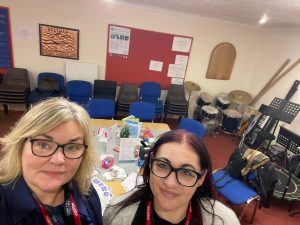
Plus, we’ve sprinkled a few photos in this update of our brilliant engagement team: thank you as always to Ali, Belle, Corinne, Karen, and Serene.
The PINS (Partnerships for Inclusion of Neurodiversity in Schools) and Autism in Schools initiatives aim to improve school experiences for children and young people with SEND (special educational needs and/or disabilities). The projects are similar: they are both funded by the NHS and involve parent carer groups, and training and support for staff. The Autism in Schools (AiS) project also includes a programme working directly with pupils. There is a list of all the schools and nurseries currently involved in both projects at the end of this page.
Here’s a quick overview of both projects this term in numbers:
- 247 parent carers have attended our sessions
- 27 schools in total
- 26 events/activities held (21 parent carer groups already held, plus 5 other school events which we’ve attended: parents’ evenings, Christmas fairs, SEND info sessions – and standing at the school gates (with permission!)
- 39 hours (approx.) spent chatting with parent carers
Getting started
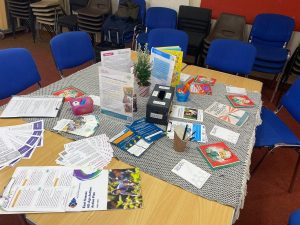
We began the academic year with initial meetings at each of the new PINS schools where we joined school staff, CLASS (the communication, learning, and autism support service), and the PINS project manager to chat about what will be involved. It was a good opportunity for everyone to get together and agree what the priorities for each school will be within the project.
When new schools join one of the projects, surveys are distributed by CLASS to school staff and pupils. ESPCF also sends an anonymous survey to the parent carers at each school. A total of 486 parent carers completed the ESPCF survey across the 14 schools that joined the PINS project in September 2025, and we are grateful for their time and effort as this provides valuable feedback and helps prioritise areas of concern.
The numbers
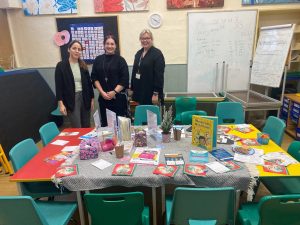 As set out above, in the relatively short period since September this year, we have met with 247 parent carers across the 27 schools and nurseries involved in the two projects,
spending approximately 39 hours chatting with parent carers. Most of this has been within 21 school groups but we have also been to parents’ evenings, a SEND information session, as well as time spent on the school gates talking to families, all of which are great opportunities to catch those already visiting the school.
The messages
Parent carer wellbeing
This is a constant theme at school groups with parent carers feeling exhausted, isolated and unsupported. Sadly, a common theme is parent carers worrying about how they support their child and whether they are ‘getting it wrong’. As an example, we heard from a parent carer with a young child who appeared ‘fine at school’ but displayed frustration and anger at home, leading the parent to feel they were doing something wrong. The peer support within the group was kind and reassuring, and talked about masking as the likely reason for the behaviour.
Eating difficulties
Difficulties in eating and in particular Avoidant/Restrictive Food Intake Disorder (ARFID) have been mentioned in several parent carer groups where we have heard about the real difficulties in finding professional support. We understand that referrals are sometimes declined with the direction to make use of local services first, even though they don’t seem to exist. ESPCF has taken this query to CAMHS and will continue to follow up this up.
Christmas
 With the holidays in mind, we have held lots of parent carer groups with ‘Neurodivergent Christmas Survival Guide’ as the theme. Although the traditions at Christmas vary for different families, there are lots of changes to routines as well as the potential for sensory overload with twinkling decorations, lots of lights, and crowded activities that can make it a very stressful time of year. We heard how hard it can be when other family members have traditional expectations and don’t quite understand how a neurodivergent child might struggle. The main message at these groups was all about giving ourselves ‘permission’ to ditch the expectations and do things in our own way.
Feedback about the groups
We’re pleased to hear that parent carers and staff at the schools are finding the groups valuable. Parent carers have said:
Very useful information regarding groups and resources available.
Helpful tips regarding Christmas, transitions, and traditions.
Excellent group. Very informative, very supportive.
Apps for visual support very helpful.
Schools have said:
Thank you for yesterday – I had really positive feedback from a couple of the parents about how it was good to meet with other parents who have similar struggles.
Thank you so much for coming to our coffee morning today. As always, it was really lovely to have you there.
I’m glad that the parents were able to open up as the meeting went on. It’s so valuable for them to have a space to discuss areas of concern.
Plans for 2026
Most of the second and third parent carer groups (we hold three groups across the school year) for the year two PINS schools are already in the diary. As well as the usual chance for a cuppa and to meet other parent carers, some of the groups will be covering themes such as sleep, emotional dysregulation, and managing transitions.
ESPCF has received a small amount of funding to reach out to the schools involved in the year one PINS project and we hope to facilitate some parent carer groups and/or support the schools to facilitate their own groups.
The AiS project has worked a little differently in that we have been able to continue working with the year one schools, and some of the parent carer groups are now quite regular and embedded within the schools. We plan to take advantage of the wealth of experience of parent carers to find out what is important within some of the SEND-relevant school policies – such as the behaviour policy and the accessibility policy. Keep a lookout in the New Year when we’ll be asking for your views.
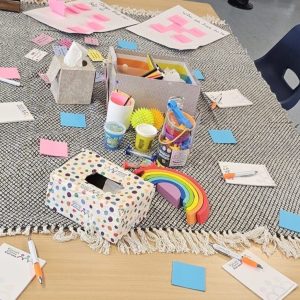 Many of the schools we have visited have some great ideas in place that don’t need extra staff and resources but can make a significant positive difference to a child who is struggling at school. This includes some changes that have been made because of parent carer feedback. For example, one of the parent carer groups talked about the Neurodivergent Christmas Survival Guide and how school could help with some of the challenges during this period. The school in question has a designated space for SEND learners and as a result this area was left without decorations. A very simple idea but nonetheless one that had a positive impact for the children struggling with sensory overload. And at a recent session, we brought along small fidget toys for the table and the school SENCO said they were the perfect size to have on tables in classes – again, simple but hopefully effective change.
Work is currently underway to capture all these examples of good practice so they can be shared across all schools. We will keep you updated.
List of schools involved in the projects
Partnerships for Inclusion of Neurodiversity in Schools (PINS) – year two
Barcombe Primary School
Battle & Langton CE Primary School
Chyngton Primary School
Cradle Hill Community Primary School
Forest Row CE Primary School
Hamsey Community Primary School
Hollington Primary School
Iford & Kingston CE Primary School
Oakwood Primary Academy
Plumpton Primary School
Punnetts Town Community Primary School
Rocks Park Primary School
Salehurst CE Primary School
Stone Cross School
Partnerships for Inclusion of Neurodiversity in Schools (PINS) – year one
Ashdown Primary School
The Baird Primary Academy
Bodiam CE Primary School
Brede Primary School
Buxted CE Primary School
Dallington CE Primary School
Danehill Primary School
Guestling-Bradshaw Primary School
Newick CE Primary School
Pevensey and Westham Primary School
Polegate Primary School
Ringmer Primary and Nursery School
Rotherfield Primary School
St Mary the Virgin Church of England Primary School
St Thomas a Becket Primary School
Willingdon Primary School
Autism in Schools
Bexhill Academy
Ocklynge Junior School
New Horizons Special School
Pashley Down Infant School
Priory Secondary School
South Malling Primary School
Southover Primary School
The St Leonards Academy
Wallands Primary School
Western Road Primary School
St Nick’s Nursery
South Malling Nursery
Wallands Nursery